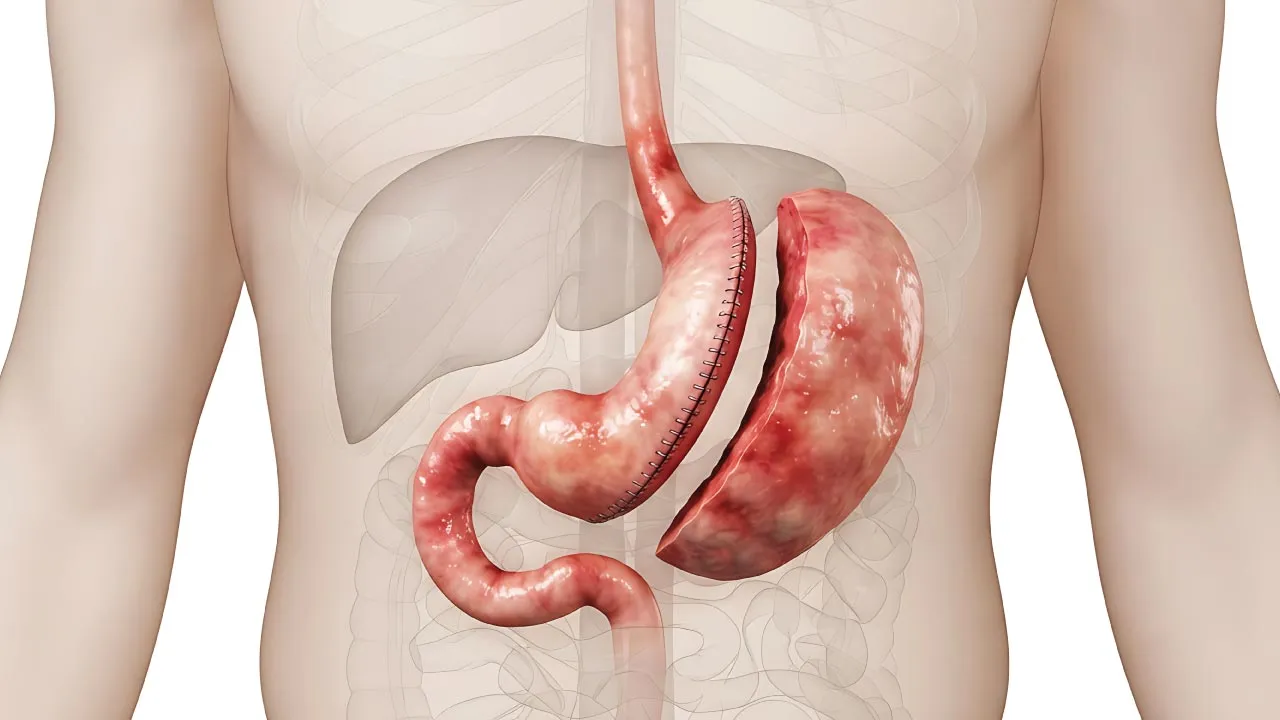
When people hear the term "sleeve surgery," they often picture a smaller stomach but may not know what actually happens during the procedure.
Sleeve gastrectomy is a type of bariatric surgery in which a large portion of the stomach is permanently removed, leaving a narrower, tube-shaped stomach. The procedure changes the size and shape of the stomach while keeping the digestive tract connected in its usual sequence.
Understanding what happens during surgery can make the procedure feel much less mysterious.
What Is Sleeve Gastrectomy?
Sleeve gastrectomy, also called gastric sleeve surgery, is a weight loss procedure that reduces the size of the stomach.
Unlike gastric bypass, the intestines are not rerouted during a standard sleeve gastrectomy. Instead, the surgeon removes a substantial portion of the stomach and creates a smaller stomach pouch or "sleeve."
The remaining stomach continues to connect to the esophagus above and the small intestine below, so food follows the normal digestive pathway.
What Happens To The Stomach During Surgery?
Sleeve surgery is commonly performed laparoscopically through several small abdominal incisions.
The surgeon carefully separates the stomach from surrounding tissues and identifies the portion that will remain.
A surgical stapling device is then used to divide the stomach and create a long, narrow stomach sleeve. The larger outer portion of the stomach is removed from the body.
The remaining stomach is considerably smaller than it was before surgery.
The exact size and shape of the sleeve can vary based on the patient's anatomy and the surgical technique used.
Is The Stomach Completely Removed?
No.
Only a portion of the stomach is removed. The remaining section forms the sleeve.
The stomach does not become a separate pouch disconnected from the digestive system. It remains connected to the esophagus and the small intestine, allowing food to pass through the normal route.
The removed portion cannot simply grow back, which is why sleeve gastrectomy is considered a permanent anatomical change.
Does Food Still Go Through The Normal Digestive Route?
Yes.
One of the important differences between sleeve gastrectomy and gastric bypass is that sleeve surgery does not bypass the intestines.
After the procedure, food travels from the esophagus into the smaller stomach sleeve and then into the small intestine.
Because the digestive route remains intact, the procedure primarily changes stomach capacity and certain physiological signals involved in appetite and eating.
Why Does A Smaller Stomach Affect How Much You Eat?
Before surgery, the stomach can expand considerably as food enters it.
After sleeve gastrectomy, the remaining stomach has much less capacity. Patients therefore tend to feel full after eating smaller amounts of food.
The effect is not simply about having less physical space. Sleeve gastrectomy also changes gastrointestinal hormones involved in hunger and appetite.
A large portion of the stomach that produces ghrelin, a hormone involved in hunger signaling, is removed during the procedure. Changes in appetite can therefore occur alongside the reduction in stomach capacity.
The degree of appetite change varies from person to person.
What Happens To Digestion After Sleeve Surgery?
The stomach continues to produce digestive juices and participate in digestion.
Food still passes through the stomach before entering the small intestine. However, the smaller stomach may change how quickly food moves through the stomach and how much can be eaten at one time.
This is why eating habits after surgery are different.
Patients are generally instructed to progress gradually from liquids to other foods as healing occurs, and they need to follow the eating plan provided by their bariatric team.
What Does The Stomach Look Like After Healing?
After healing, the stomach has a long, narrow shape rather than its previous larger, curved form.
It is often compared to a tube or sleeve, which is where the name "sleeve gastrectomy" comes from.
Although the stomach is smaller, it is still a functioning stomach. It continues to receive food, mix it with digestive juices, and pass its contents into the small intestine.
What Happens Immediately After Surgery?
The first few days involve recovery from surgery and gradual reintroduction of fluids and nutrition.
Patients are usually monitored for signs of complications and are given specific instructions about drinking, movement, medications, and diet.
Your bariatric team may gradually advance your diet based on your recovery and individual needs.
Following these instructions is important because the stomach needs time to heal.
Why Do Eating Habits Change After Sleeve Surgery?
A smaller stomach means portion sizes need to be significantly smaller.
Patients are generally encouraged to:
- Eat slowly
- Take small bites
- Chew food thoroughly
- Follow the recommended portion sizes
- Avoid drinking fluids too quickly
- Follow the prescribed dietary progression
- Take recommended vitamins and supplements
Eating too quickly or consuming more than the healing stomach can comfortably handle may lead to nausea, discomfort, vomiting, or other symptoms.
Is Sleeve Surgery Reversible?
Sleeve gastrectomy is generally considered a permanent procedure because part of the stomach is removed.
It should therefore be approached as a long-term treatment rather than a temporary intervention.
If a patient later develops complications or experiences inadequate weight loss or weight regain, additional treatment options may sometimes be considered. These decisions require individual assessment by a bariatric surgeon.
Can The Stomach Stretch After Sleeve Surgery?
The stomach can change in capacity over time, but it does not simply return to its original size in the same way it was before surgery.
Eating patterns, portion sizes, dietary habits, and individual factors can influence long-term outcomes.
This is one reason ongoing follow-up with a bariatric team is important after surgery.
What Does Long-Term Follow-Up Involve?
Sleeve surgery is not only about the operation itself. Long-term follow-up helps patients adapt to changes in eating, nutrition, activity, and overall health.
Your bariatric team may monitor:
- Weight changes
- Nutritional status
- Vitamin and mineral levels
- Dietary tolerance
- Gastrointestinal symptoms
- Physical activity
- Other health conditions affected by weight
Regular follow-up can help identify nutritional or other concerns and support long-term management.
The Stomach Changes, But Your Digestive System Keeps Working
Sleeve gastrectomy does not remove the entire stomach or reroute the intestines. Instead, a substantial portion of the stomach is removed, leaving a smaller tube-shaped stomach that remains connected to the normal digestive pathway.
The smaller stomach capacity, along with changes in appetite-related signals, can affect how much and how often you eat.
Understanding these changes can help patients approach sleeve surgery with more realistic expectations and a clearer idea of what recovery and long-term care involve.
Considering Sleeve Gastrectomy?
If you are exploring bariatric surgery and want to understand how sleeve gastrectomy changes the stomach, Dr. Santhosh R can evaluate your health, discuss whether the procedure may be appropriate for you, and explain what the surgical and recovery process involves.
Frequently Asked Questions
Q: How much of the stomach is removed during sleeve surgery?
A: Sleeve gastrectomy removes a substantial portion of the stomach, leaving a narrower, tube-shaped stomach. The exact amount and final shape can vary depending on the patient's anatomy and surgical technique.
Q: Does food still go into the stomach after sleeve surgery?
A: Yes. Food enters the remaining stomach sleeve through the esophagus and then passes into the small intestine through the normal digestive pathway.
Q: Does sleeve surgery affect hunger?
A: It can. Removing a large portion of the stomach can affect levels of hormones involved in hunger and appetite, including ghrelin. The effect varies among individuals.
Q: Can I eat normal food after sleeve gastrectomy?
A: Most patients gradually return to a broader range of foods as the stomach heals. However, portion sizes are smaller, and the timing and progression of the diet should follow the plan provided by the bariatric team.
Q: Can the stomach become larger after sleeve surgery?
A: The stomach can change in capacity over time, but it does not simply return to its original form. Long-term eating habits and individual factors can influence stomach capacity and treatment outcomes.
Q: Is sleeve gastrectomy permanent?
A: Yes. Because part of the stomach is surgically removed, sleeve gastrectomy is generally considered permanent. Any future treatment decisions depend on the individual's circumstances and require assessment by a bariatric surgeon.